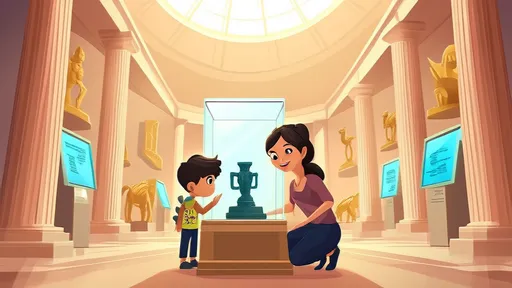
Museums have long been regarded as hallowed halls of quiet contemplation, places where whispers are the norm and curiosity is often stifled by the sheer weight of history. For parents, the idea of taking young children to such an environment can feel daunting, if not outright unappealing. The fear of bored, restless kids and the anxiety of disturbing other visitors can make a family museum trip seem more like a chore than an adventure. However, a quiet revolution is taking place within these cultural institutions. Across the globe, museums are reimagining themselves, transforming from static repositories of the past into dynamic, interactive playgrounds designed to ignite a lifelong passion for history in the youngest of minds. This shift is creating unparalleled opportunities for families to explore, learn, and bond together.
The key to unlocking a child's fascination with history lies not in dates and names, but in storytelling and tangible connection. Modern museum curators understand this implicitly. They are moving away from the traditional "look, don't touch" model and embracing experiential learning. Instead of simply reading a placard about an ancient Roman soldier, children can now try on a replica helmet, feel the weight of a (blunt) gladius sword, and stand in a recreated barracks. This tactile experience transforms a distant, abstract concept into a tangible reality. The soldier is no longer a figure in a textbook; he becomes a person a child can empathize with, wondering about the weight of his armor or the food he ate. This is the magic of interactive history—it makes the past personal.
Many forward-thinking history museums have developed dedicated family trails or activity backpacks. These are not afterthoughts but are central to the visitor experience. Upon arrival, families can pick up a pack containing a map, a magnifying glass, a set of clues, and perhaps even a period-specific costume piece like a pirate’s eye patch or a Victorian bonnet. This immediately frames the visit as a quest, an exciting mission to be accomplished. The child becomes an active detective, searching for specific artifacts, solving puzzles, and uncovering secrets hidden in plain sight. This gamification of learning is incredibly powerful. It channels a child's natural energy and competitive spirit into a focused exploration of the exhibits, ensuring they are engaged from the first moment to the last.
Technology, when used thoughtfully, is a tremendous ally in this mission. Rather than isolating visitors behind a screen, augmented reality (AR) apps can bring exhibits to life in breathtaking ways. Imagine pointing a tablet at a skeletal dinosaur frame and watching muscles, skin, and feathers render in real-time, with the creature roaring and moving in its intended habitat. Or standing before a painting of a historical battle and seeing the scene animate, hearing the clash of swords and the shouts of soldiers. This seamless blend of the physical and digital worlds creates "wow" moments that are unforgettable. It provides context and narrative in a visually stunning format that resonates deeply with digital-native children, proving that history is anything but boring.
Beyond high-tech solutions, some of the most effective interactions are beautifully simple. Hands-on workshops where children can grind grain like an ancient Egyptian, weave on a small loom, or piece together a broken pottery sherd like an archaeologist teach fundamental historical concepts through doing. The act of creation forges a deep, muscle-memory understanding of the challenges and ingenuity of people from another time. Similarly, museums are designing spaces specifically for imaginative play. A full-scale replica of a Viking longship where children can hoist the sail and pretend to navigate fjords, or a 1920s grocer's shop where they can use replica tins and scales, allows them to literally step into the past. This unstructured play is where the most authentic learning and connection happen.
The role of the parent or caregiver is also evolving in these new museum spaces. You are no longer just a chaperone or a reader of information panels; you are a co-explorer and a facilitator of wonder. Your enthusiasm is contagious. Ask open-ended questions prompted by the activity guides: "Why do you think they built the pyramid this way?" or "What would you have done if you were on this ship during a storm?" Listen to their theories, no matter how fanciful, and use them as a springboard for discussion. Your engagement shows your child that history is a living, breathing dialogue full of mysteries waiting to be solved together. This shared experience of discovery strengthens your bond and creates positive memories associated with museums and learning.
Ultimately, the goal of these interactive experiences is not to create tiny historians who can recite monarchs or battles, but to foster a set of invaluable skills. As children engage with the past in a hands-on way, they are honing their critical thinking, empathy, and curiosity. They learn to ask questions, to consider different perspectives, and to understand that the present is built upon the layers of the past. A successful museum visit is measured not by how much a child remembers, but by the spark in their eyes when they leave, by the questions they ask in the car on the way home, and by their desire to return and discover more. They begin to see history not as a closed book, but as an endless, fascinating story in which they, too, have a role.
The next time you consider a family outing, look beyond the playground or the movie theater. Seek out a museum that champions this interactive ethos. Prepare for your visit by building excitement, perhaps by reading a related storybook or watching a short documentary. During your visit, follow your child's lead, embrace the activities, and don't worry about seeing everything. The objective is depth of experience, not breadth. You might just be surprised at what you discover together. In helping your child connect with the past, you are giving them a priceless gift: a sense of their place in the long, incredible story of humanity, and the inspiration to help shape its next chapter.

By /Aug 22, 2025

By /Aug 22, 2025

By /Aug 22, 2025

By /Aug 22, 2025

By /Aug 22, 2025

By /Aug 22, 2025

By /Aug 22, 2025
By /Aug 22, 2025
By /Aug 22, 2025

By /Aug 22, 2025

By /Aug 22, 2025

By /Aug 22, 2025

By /Aug 22, 2025
By /Aug 22, 2025

By /Aug 22, 2025
By /Aug 22, 2025

By /Aug 22, 2025
By /Aug 22, 2025
By /Aug 22, 2025

By /Aug 22, 2025