Nestled in the misty mountains of Jiangxi province, Jingdezhen has been the porcelain capital of the world for over a millennium. For centuries, this city has not only supplied emperors with the finest celadon and blue-and-white wares but has also preserved the ancient alchemy of turning humble clay into objects of transcendent beauty. Today, a journey to Jingdezhen offers more than just a glimpse into this storied past; it invites the modern traveler into a hands-on, transformative experience of creation—from the first touch of wet clay on the potter's wheel to the awe-inspiring moment of unloading the kiln.
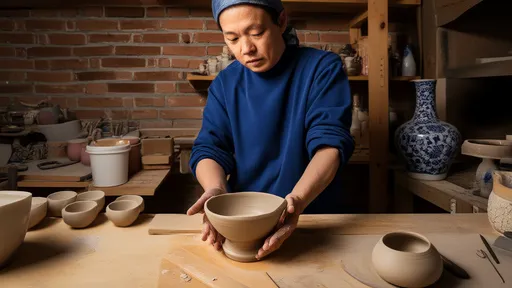
The adventure begins in a sunlit workshop, where the air is thick with the earthy scent of clay and the quiet concentration of artisans. Here, you are not a spectator but a participant. Sitting before a spinning potter's wheel for the first time is a humbling experience. The wheel, or la pi ji, is a deceptively simple device—a disc that rotates on a central axis, powered by a foot pedal or an electric motor. The goal is to center the clay, a fundamental skill that every potter must master. It sounds straightforward, but it is anything but. You wedge a ball of prepared clay, throw it onto the center of the wheel, and wet your hands. As the wheel spins, you apply pressure, trying to coax the wobbly mass into a perfect, symmetrical cone. It is a battle between your intentions and the will of the material. Your hands, guided by a master potter, learn the pressure needed—too much and the form collapses; too little and nothing happens. This initial struggle is where the respect for the craft is born. It is physical, it is meditative, and it is the first step in a dialogue between the maker and the earth.
Once centered, the magic truly begins. With a gentle press of your thumbs, you open up the centered clay, creating a hollow. The walls begin to rise, seemingly of their own volition, as you steady your hands and guide the form upward. This stage, called pulling, is where the vessel takes shape. You feel the thickness of the walls through your fingertips, a sensory language that tells you if the piece is balanced or destined to fail. The wheel spins, water splashes, and under your hands, a simple bowl or a graceful vase emerges. The form is alive, responsive to every subtle movement. It is an incredible feeling of power and fragility combined. A moment of distraction, a slight tremor, and the entire piece can warp or slump back into a formless lump. But when it works, it is pure alchemy. You have created something from nothing. This raw, wet piece, called greenware, is delicate and full of potential. It is set aside on a board to slowly dry to a leather-hard state, ready for the next phase of its transformation.
Trimming and carving come next, when the clay has firmed up but is still malleable. This is the stage for refinement and adding character. You place the leather-hard piece back on the wheel, often upside down, and use sharp metal tools to shave away excess clay from the base, creating a foot ring. This process lightens the piece and gives it a finished, professional profile. This is also the time for personal expression. With smaller tools, you can carve intricate patterns, landscapes, or calligraphy into the clay's surface. This sgraffito technique reveals the lighter colored clay beneath the surface slip, creating beautiful contrasts. Alternatively, you might apply underglaze designs with a brush, painting freehand with cobalt oxide for the classic blue-and-white style Jingdezhen is famous for. Every stroke is permanent, a decision locked into the very body of the piece. The workshop is quiet, filled with the soft scraping of tools and the focused energy of creation.
After the piece is bone-dry, it undergoes its first trial by fire: the biscuit firing. The kiln, a modern electric version of the ancient dragon kilns that once climbed the hillsides, is loaded carefully. The greenware is now bisque, incredibly fragile. The firing cycle is slow and controlled, ramping up over several hours to around 900 degrees Celsius. This process drives out all the remaining physical water and chemically bonded water from the clay particles, sintering them together and transforming the soft clay into a hard, porous, and stable ceramic body. Unloading the bisque kiln is always a moment of trepidation. Some pieces may have cracked or exploded due to unseen air bubbles or drying too fast. But those that survived are now ready to receive their skin of glass—the glaze.
Glazing is where science and art collide in a spectacular way. The bisque ware, now absorbent, is ready to be dressed in color. The choices are vast and deeply rooted in tradition. You might dip your piece entirely into a vat of creamy qingbai glaze, aspiring for the pale, bluish-green tone of Southern Song dynasty celadon. Or you might choose a vibrant copper-red, hoping for the elusive ox-blood effect. Using tongs, you immerse the piece quickly and evenly, a swift motion that leaves a matte coating on the surface. For more precise designs, you can paint the glaze on with a brush. The dried glaze looks nothing like the final product; it is a dull, powdery layer that holds its secret until the final firing. The glazed piece must be handled with extreme care, as any fingerprint or smudge will be fired into the finish forever. Once prepared, it is loaded into the kiln for its final, and most dramatic, transformation.
The high-fire reduction firing is the climax of the ceramic process. This is not a simple baking; it is a carefully orchestrated chemical reaction. The kiln is heated gradually to its peak temperature—often between 1280 and 1350 degrees Celsius for porcelain. At the critical moment, the atmosphere inside the kiln is altered from oxygen-rich (oxidation) to oxygen-starved (reduction). This is achieved by limiting the air intake and introducing fuel in a way that creates incomplete combustion. In this reduced atmosphere, oxygen is stripped from the metal oxides in the glazes and clay body, forcing them to reorganize and develop their final colors and textures. The brilliant reds from copper, the celadon greens from iron, and the pristine whites of porcelain all depend on this precise and volatile environment. The kiln cools for a full day or more, the anticipation building. You cannot rush this process; the ceramics must cool slowly to avoid thermal shock and cracking.
Finally, the day arrives to open the kiln. It is a ceremony. The kiln is cool to the touch. As the door is unsealed, there is a collective intake of breath. Unloading is like uncovering buried treasure. Each piece is revealed, one by one. Some are perfect, their glazes having melted into a flawless, glossy pool of color. Some are surprises—the glaze may have run more than expected, or the reduction atmosphere may have created a unique, unintended effect that is somehow more beautiful than the original plan. And some are heartbreaks; a crack, a glaze that turned dull, or a piece that stuck to the kiln shelf. This is the unforgiving nature of the fire. It gives and it takes. But when you hold your finished piece—the bowl you centered, the vase you pulled, the design you carved—now transformed into a luminous, ringing, permanent object, the entire journey coalesces into a single moment of profound understanding. You have not just made a pot; you have partaken in an ancient ritual, a dialogue with earth, water, and fire that has defined Jingdezhen for seventeen hundred years. It is an experience that leaves its mark on your soul as permanently as the fire leaves its mark on the clay.

By /Aug 22, 2025

By /Aug 22, 2025

By /Aug 22, 2025

By /Aug 22, 2025

By /Aug 22, 2025
By /Aug 22, 2025

By /Aug 22, 2025
By /Aug 22, 2025
By /Aug 22, 2025
By /Aug 22, 2025

By /Aug 22, 2025

By /Aug 22, 2025

By /Aug 22, 2025

By /Aug 22, 2025

By /Aug 22, 2025

By /Aug 22, 2025

By /Aug 22, 2025

By /Aug 22, 2025

By /Aug 22, 2025

By /Aug 22, 2025