As the summer rains begin to drench the verdant landscapes of Yunnan, a mystical transformation takes place beneath the forest canopy. The damp earth, warmed by the subtropical sun, becomes a fertile ground for one of nature’s most fascinating phenomena—the emergence of wild mushrooms. For locals and adventurous travelers alike, wild mushroom season is not merely a period of culinary delight but a cultural event woven into the very fabric of life in this biodiverse region.
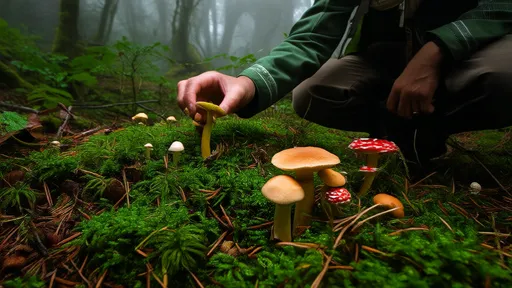
Venturing into the pine-scented forests at dawn, foraging enthusiasts armed with bamboo baskets and keen eyes embark on a quest that feels both ancient and thrilling. The experience is as much about the hunt as it is about the harvest. There’s a palpable sense of excitement in the air, a whispered reverence for the hidden treasures that might be nestled under fallen leaves, clinging to decaying logs, or peeking through mossy clearings. Each step is deliberate, each discovery a small victory. The forest reveals its secrets only to those patient and perceptive enough to notice the subtle signs—a slight bulge in the soil, a distinctive color amid the greenery, or the faint, earthy aroma that signals a mushroom’s presence.
Among the most sought-after varieties is the illustrious matsutake, known for its spicy-aromatic scent and firm texture. Highly prized in international markets, especially in Japan, this mushroom commands impressive prices and is often referred to as "white gold" by foragers. Then there’s the porcini, with its rich, nutty flavor that enhances everything from pastas to risottos. The chanterelle, golden and trumpet-shaped, offers a delicate peppery taste, while the morel, with its honeycomb appearance, is a favorite for its robust, earthy notes. Not to be overlooked is the Termitomyces, a genus that grows in symbiotic relationship with termites and is celebrated for its tender flesh and umami depth.
However, the beauty and abundance of Yunnan’s fungal bounty come with a sobering caveat: the line between delicacy and danger can be perilously thin. The same forests that produce edible marvels are also home to some of the world’s most toxic mushrooms. Species like the Death Cap (Amanita phalloides) and the Destroying Angel (Amanita bisporigera) can be fatal even in small quantities, and they often grow alongside harmless varieties. Misidentification is the leading cause of mushroom poisoning, a risk that foragers cannot afford to take lightly.
Understanding the distinct characteristics of each mushroom is crucial. Edible mushrooms often have specific traits—such as certain colors, smells, or growth patterns—that differentiate them from their poisonous counterparts. For instance, true morels are hollow from stem to cap, while false morels are not. Chanterelles have blunt, fork-like gills, whereas look-alikes like the Jack O'Lantern mushroom have sharp, knife-like gills and are poisonous. Yet, even with such knowledge, mistakes can happen. This is why experienced foragers emphasize the golden rule: when in doubt, throw it out.
Beyond visual identification, many seasoned pickers rely on traditional knowledge passed down through generations. They might test a mushroom’s reactivity—for example, checking if it stains blue when cut or observing whether insects have nibbled on it (though this is not a reliable indicator of safety). Some also pay attention to the habitat: certain mushrooms grow exclusively near specific trees or in particular soil types. However, these methods are not foolproof, and modern mycology advises against relying solely on folk wisdom.
For those who are new to foraging, the safest approach is to go with an experienced guide. Local experts not only know where to find the best patches but are also adept at distinguishing edible species from toxic ones. Many tour operators in Yunnan now offer guided foraging trips, combining ecological education with hands-on experience. These excursions often conclude with a cooking session where participants learn how to clean, prepare, and savor their harvest in traditional Yunnanese dishes.
Even after successful identification, proper handling and preparation are essential to ensure safety. Some edible mushrooms contain natural toxins that can be neutralized through cooking. For example, morels must never be eaten raw, as they contain hydrazine toxins that are broken down by heat. Similarly, the beloved porcini should be cooked thoroughly to avoid gastrointestinal discomfort. Cleaning is another critical step; mushrooms should be brushed free of dirt rather than washed, as excess moisture can affect their texture and flavor.
In Yunnan, wild mushrooms are typically stir-fried with garlic and chilies, simmered in broths, or steamed to preserve their natural flavors. One classic dish is Jian Shou Qing, a quick stir-fry of assorted wild mushrooms that highlights their diverse textures and tastes. Another favorite is chicken soup infused with matsutake, a comforting yet luxurious preparation. For those who prefer bold flavors, mushrooms are often grilled or roasted with local spices like Sichuan pepper and star anise.
Despite the precautions, mushroom poisoning incidents still occur, particularly during peak season. Symptoms can range from mild nausea and dizziness to severe liver damage or neurological effects, depending on the toxin involved. Health authorities in Yunnan have established protocols for such emergencies, including dedicated hotlines and hospital units specializing in mycotoxin treatment. Public awareness campaigns are also rolled out annually, reminding people to forage responsibly and seek immediate medical attention if poisoning is suspected.
The allure of Yunnan’s wild mushrooms transcends the plate. It is a testament to the region’s incredible biodiversity and a reminder of humanity’s deep connection to nature. Foraging is more than a means to gather food; it is a way to engage with the environment, to learn its rhythms, and to respect its dangers. As one local forager aptly put it, "Every mushroom has a story, and every forest has a lesson."
For visitors, participating in mushroom season offers a unique glimpse into Yunnan’s cultural and natural heritage. It is an opportunity to slow down, to appreciate the intricacies of the ecosystem, and to taste the unparalleled flavors that emerge from the forest floor. But with this opportunity comes responsibility—to forage ethically, to prioritize safety, and to preserve the delicate balance that allows these fungal wonders to thrive year after year.
As the season progresses, the markets of Kunming, Dali, and Lijiang brim with baskets of freshly picked mushrooms, each variety telling a story of the forest from which it came. The air fills with the sounds of bargaining and the aromas of earth and spice. In homes and restaurants, kitchens come alive with the sizzle of pans and the steam of pots, transforming these forest gems into meals that nourish both body and soul. This is Yunnan’s wild mushroom season: a time of abundance, caution, and celebration.

By /Aug 22, 2025

By /Aug 22, 2025
By /Aug 22, 2025

By /Aug 22, 2025
By /Aug 22, 2025

By /Aug 22, 2025

By /Aug 22, 2025

By /Aug 22, 2025

By /Aug 22, 2025

By /Aug 22, 2025

By /Aug 22, 2025

By /Aug 22, 2025

By /Aug 22, 2025

By /Aug 22, 2025

By /Aug 22, 2025

By /Aug 22, 2025

By /Aug 22, 2025

By /Aug 22, 2025

By /Aug 22, 2025
By /Aug 22, 2025
