As the first snowflakes dust the mountain peaks, a unique excitement builds in the hearts of adventurers. The world of skiing beckons, a realm of crisp air, breathtaking vistas, and the exhilarating rush of gliding down a snowy slope. For the uninitiated, this world can seem daunting—a complex language of equipment, techniques, and mountain etiquette to learn. This guide is your first chairlift ride into that world, designed to demystify the process and equip you with the foundational knowledge to not just try skiing, but to truly begin your journey in it. We will walk through everything from the gear you’ll need to the nuances of choosing your first mountain, ensuring your debut on the snow is filled with confidence and joy, not confusion and cold feet.
The journey of a thousand turns begins with a single piece of gear: the boot. This is the most critical interface between you and your ski equipment, and getting it right is non-negotiable. A proper ski boot should feel snug, like a firm handshake around your foot and calf, but it should not cause sharp pain or cut off circulation. Your heel must be locked firmly in place to prevent lifting, which is essential for control. Many beginners make the mistake of choosing a boot that is too large, thinking it will be more comfortable. This is a grave error; a loose boot translates every movement into a delayed, sloppy reaction from the ski, making learning infinitely harder. Visit a professional boot fitter at a reputable ski shop. They can measure your foot, understand your arch, and recommend a boot that matches your beginner status and foot shape. Remember, you can always heat-mold liners or make small adjustments for comfort, but you cannot shrink a shell that is too big.
Once your feet are sorted, attention turns to the skis, bindings, and poles. For a first-timer, renting is unequivocally the wisest path. Modern beginner-specific skis are shorter, softer, and have shaped designs that make turning easier than ever before. Rental shops pre-set the bindings to a conservative release setting appropriate for beginners, a crucial safety feature. When you step into your bindings, ensure every piece of snow and ice is cleared from your boot soles. A clean connection is a safe connection. Your poles are primarily for rhythm and balance at this stage, not for propulsion. A good fitting rule is to turn a pole upside down and grip it directly under the basket; your forearm should be parallel to the floor.
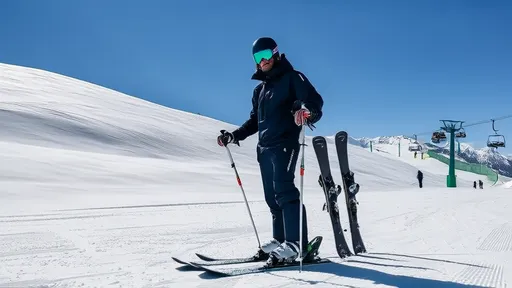
What you wear on the mountain is your personal climate control system. Cotton is your enemy—it absorbs moisture and loses all insulating properties when wet, leading to a miserable, cold experience. The golden rule is layering with synthetic or wool materials. Start with a moisture-wicking base layer to keep sweat away from your skin. Add an insulating mid-layer, like a fleece or lightweight puffy, for warmth. Your final defense is a waterproof and breathable ski jacket and pants. This shell layer protects you from wind, snow, and water. Do not forget accessories: a helmet is absolutely mandatory for safety, while goggles, waterproof gloves, and quality ski socks are essential for comfort and performance. Dressing appropriately is not about luxury; it is about staying on the hill longer and enjoying every moment.
With gear assembled, the next monumental step is selecting your first ski resort. Not all mountains are created equal for learning. Seek out resorts that proudly advertise their beginner-friendly terrain. Look for a large, dedicated learning area, often called a bunny hill or a magic carpet area. These zones are typically separate from the main mountain traffic, gently sloped, and serviced by a slow-moving surface lift like a magic carpet or a rope tow. This controlled environment is your sanctuary. Resorts with a strong ski school presence are also a great indicator. A mountain with a single, intimidating green run from the summit is not an ideal classroom. Instead, choose a destination with multiple wide, gentle green runs accessible from a beginner-friendly chairlift. Research online, look at trail maps, and read reviews from other beginners. Your goal is to find a supportive, low-pressure environment to make your first turns.
This brings us to the single best investment a new skier can make: lessons. The value of professional instruction cannot be overstated. A certified instructor from the resort’s ski school does more than just teach you how to snowplow. They provide a structured, safe, and progressive learning path. They will teach you how to put on your equipment, how to walk on flat ground, how to ride a lift, and most importantly, how to control your speed and direction. They see and correct errors in your stance and movement that you cannot feel. Trying to learn from a well-meaning friend or partner often leads to frustration, bad habits, and a much higher risk of injury. A instructor’s objective eyes and proven teaching methods will accelerate your learning curve dramatically, turning a potentially frustrating day into a breakthrough one. Book a group lesson for a social and affordable option, or a private lesson for focused, one-on-one attention.
Now, you’re geared up, you’re on the beginner slope, and you have your instructor. The fundamentals you learn here are the bedrock of all skiing. It all starts with the athletic stance: knees bent, weight centered over the middle of your feet, hands forward and visible in your peripheral vision, and your body relaxed. From this balanced position, you will learn the snowplow or wedge—the foundational maneuver for speed control and turning. By pushing the tails of your skis out into a 'V' shape, you create friction to slow down. To turn, you simply apply more pressure to the opposite foot; more pressure on the right foot makes you go left, and vice versa. It feels counterintuitive at first, but soon it becomes second nature. The goal is to link these turns together smoothly, controlling your descent down the slope. Practice, patience, and trusting the process are key.
Understanding the culture and safety rules of the mountain is as important as any physical skill. The responsibility code is the law of the land. The skier or rider downhill of you always has the right of way, as they cannot see you coming. You must always be in control and able to stop or avoid other people or objects. Do not stop where you are not visible from above, such as just below a drop-off on a trail. Before starting downhill or merging onto a trail, always look uphill to yield to others. Use designated rest areas to take breaks. These rules exist for everyone’s safety. Furthermore, be mindful of lift line etiquette, wait your turn, and have your pass ready. The mountain community is generally friendly and supportive, especially of those who are new and trying their best. A positive attitude and respect for others will make the experience better for everyone.
As your first day winds down, it’s time to think about progression. Celebrate the small victories—your first successful chairlift ride, your first controlled turn, the first time you made it down without falling. Skiing is a sport that offers a lifetime of learning. After you have mastered the green beginner slopes, you can start to explore easier blue intermediate runs. Your turns will become more parallel, your stance more dynamic. The mountain will open up to you in new ways. Remember to stay hydrated, reapply sunscreen, and take breaks. Fatigue leads to mistakes and injury. Listen to your body. At the end of the day, take a moment to appreciate what you accomplished. The unique fatigue in your legs is a badge of honor. Carefully store your gear, dry out your gloves and layers, and already start dreaming about the next time you can answer the call of the mountains.

By /Aug 22, 2025

By /Aug 22, 2025

By /Aug 22, 2025
By /Aug 22, 2025

By /Aug 22, 2025

By /Aug 22, 2025

By /Aug 22, 2025

By /Aug 22, 2025

By /Aug 22, 2025

By /Aug 22, 2025

By /Aug 22, 2025
By /Aug 22, 2025

By /Aug 22, 2025

By /Aug 22, 2025

By /Aug 22, 2025

By /Aug 22, 2025

By /Aug 22, 2025

By /Aug 22, 2025

By /Aug 22, 2025

By /Aug 22, 2025
