The silent vanishing of anteaters from their native habitats echoes through the forests and grasslands of Central and South America like a fading whisper. These peculiar creatures, with their elongated snouts and bushy tails, might seem like evolutionary oddities at first glance, yet their role in the intricate web of life is profound and irreplaceable. Their disappearance, driven by the relentless forces of habitat fragmentation, road mortality, and the illegal pet trade, is not merely the loss of a single species. It is the unraveling of a thread in the ecological tapestry, one that threatens the stability and health of the entire ecosystems they once called home.
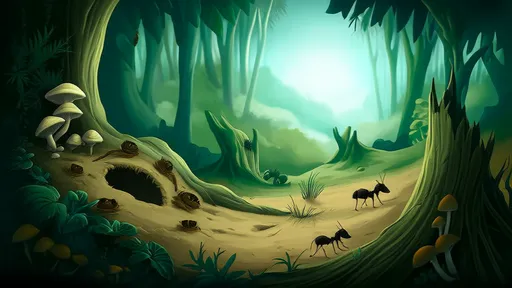
Anteaters are master engineers of pest control. Their diet consists almost exclusively of ants and termites, insects that, if left unchecked, can achieve population explosions capable of devastating local flora. A single giant anteater can consume upwards of 30,000 insects in a single day. This constant foraging behavior regulates insect colonies, preventing them from reaching densities that would lead them to strip trees of their leaves or devour the root systems of crucial ground cover. This is not a minor service; it is a fundamental regulatory function that maintains the botanical balance of the ecosystem. Without these dedicated insectivores, the scales tip. We begin to see areas where termite mounds proliferate unchecked, creating bare patches of earth where nothing else can grow. The health of the soil is compromised, and the composition of the plant community shifts in favor of species more resistant to insect predation, thereby reducing overall biodiversity.
The impact, however, extends far beyond plant life. The relationship between anteaters and the insects they consume is a classic predator-prey dynamic that has shaped the evolution of both. The insects have developed sophisticated defense mechanisms—from painful bites to fortified nests—specifically in response to the anteater’s predation pressure. In turn, the anteater has evolved its specialized snout, long sticky tongue, and powerful claws to bypass these defenses. This evolutionary arms race is a driving force of natural selection. The removal of the predator from this equation allows insect populations to not only grow in number but also to potentially change their behavior and investment in defenses, altering their evolutionary trajectory. The loss of an apex insectivore like the anteater effectively halts a millions-of-years-old dance, leaving one partner bewildered and unchallenged.
Furthermore, the anteater’s foraging habits are a form of natural tilling and aeration of the soil. As they rip open tough termite mounds and dig into ant nests, they turn over the earth. This activity mixes nutrients into the soil, improves its structure for water infiltration, and aids in the decomposition of organic matter. The abandoned nests then become microhabitats for a host of other smaller creatures, from reptiles and amphibians to other insects, providing them shelter and breeding grounds. The disappearance of anteaters means this free, continuous soil maintenance service ceases. The ground becomes harder, less fertile, and less hospitable for a myriad of other organisms that depend on these disturbed patches, leading to a cascade of secondary extinctions and a decline in the ecosystem's overall resilience.
Perhaps one of the most overlooked aspects of the anteater’s role is its function as a prey species and a host. While adult giant anteaters have few natural predators due to their size and powerful claws, juveniles are vulnerable to large cats like jaguars and pumas. Their decline represents a reduction in the food available for these apex predators, which can pressure carnivore populations and force them to turn to domestic livestock, exacerbating human-wildlife conflict. On a microscopic level, anteaters also host a unique community of parasites and microbes, many of which are specific to them. The loss of the host species means the extinction of these dependent organisms as well, resulting in a hidden loss of biodiversity that is rarely accounted for in conservation efforts.
The void left by vanishing anteaters creates an opportunity for other species to fill the vacant ecological niche, but not always with positive outcomes. In the absence of these specialist predators, generalist species, which are often more adaptable and resilient to human disturbance, may move in to exploit the now-abundant insect resources. However, these generalists are rarely as efficient and can disrupt the ecosystem in new ways. They might over-hunt certain insect species to local extinction or fail to control others, leading to new and unpredictable imbalances. This process, known as ecological release, can destabilize the community structure that had been finely tuned over millennia, making the ecosystem more chaotic and less functional.
Ultimately, the fate of the anteater is a stark lesson in interconnectedness. It demonstrates that the value of a species cannot be measured by its charisma or its obvious utility to humans. The silent work of the anteater—pest controller, soil aerator, evolutionary driver—underscores a critical truth: every organism, no matter how strange, is a cog in a vast and complex machine. The removal of a single cog might not stop the machine immediately, but it increases strain, causes misfires, and predisposes the entire system to a catastrophic failure. The disappearance of the anteater is not an isolated tragedy; it is a warning signal, a symptom of a deeper malaise within the ecosystem. Their conservation, therefore, is not just about saving one animal. It is about preserving the architectural integrity of some of the world's most vital and threatened ecosystems, ensuring they continue to function, thrive, and support the incredible diversity of life within them.

By /Aug 25, 2025

By /Aug 25, 2025
By /Aug 25, 2025
By /Aug 25, 2025

By /Aug 25, 2025

By /Aug 25, 2025
By /Aug 25, 2025

By /Aug 25, 2025

By /Aug 25, 2025

By /Aug 25, 2025

By /Aug 25, 2025
By /Aug 25, 2025
By /Aug 25, 2025
By /Aug 25, 2025
By /Aug 25, 2025
By /Aug 25, 2025
By /Aug 25, 2025
By /Aug 25, 2025
By /Aug 25, 2025
By /Aug 25, 2025
